BEN 🚜💗™️
Not your average Bushwick tattoo artist 🙃

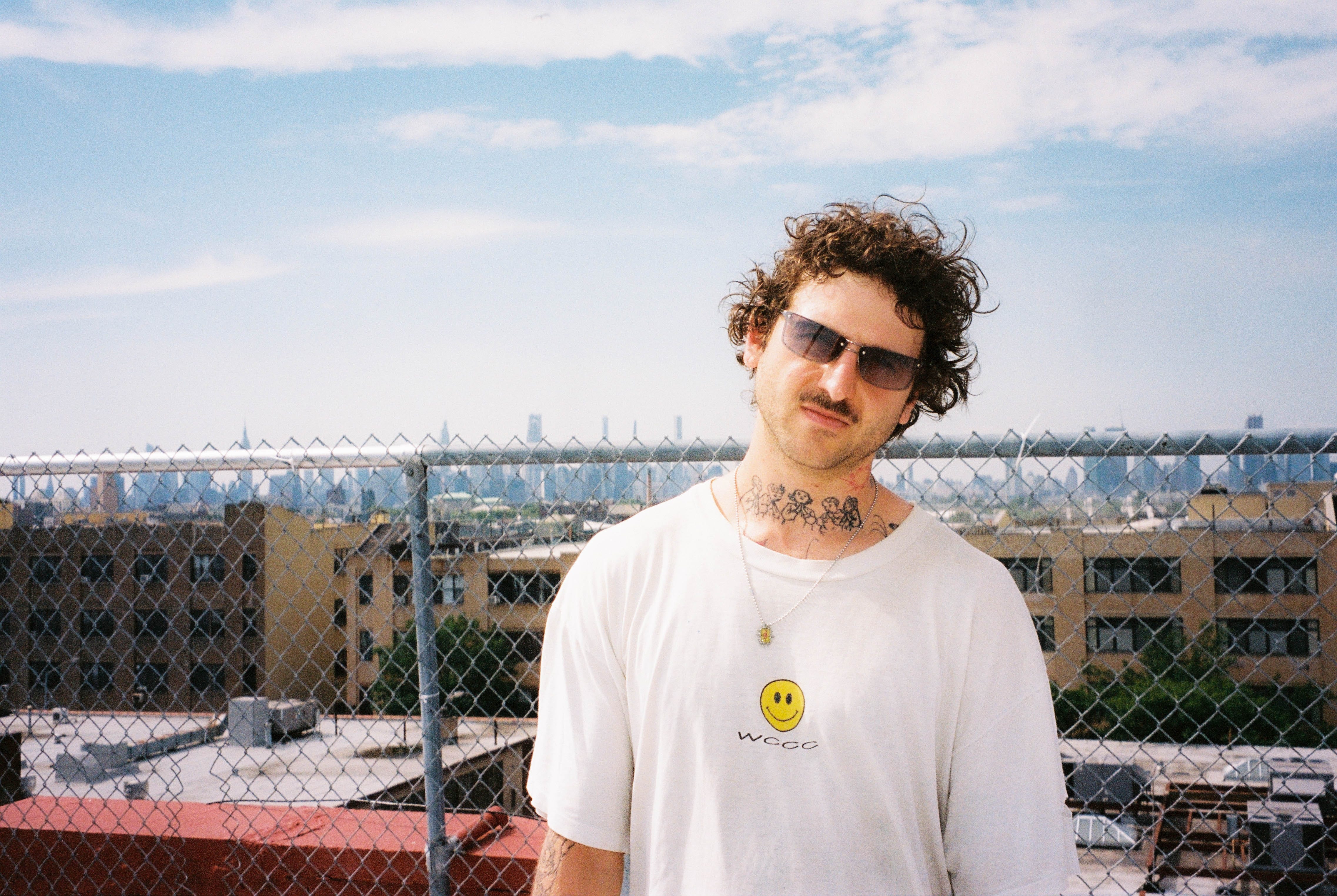
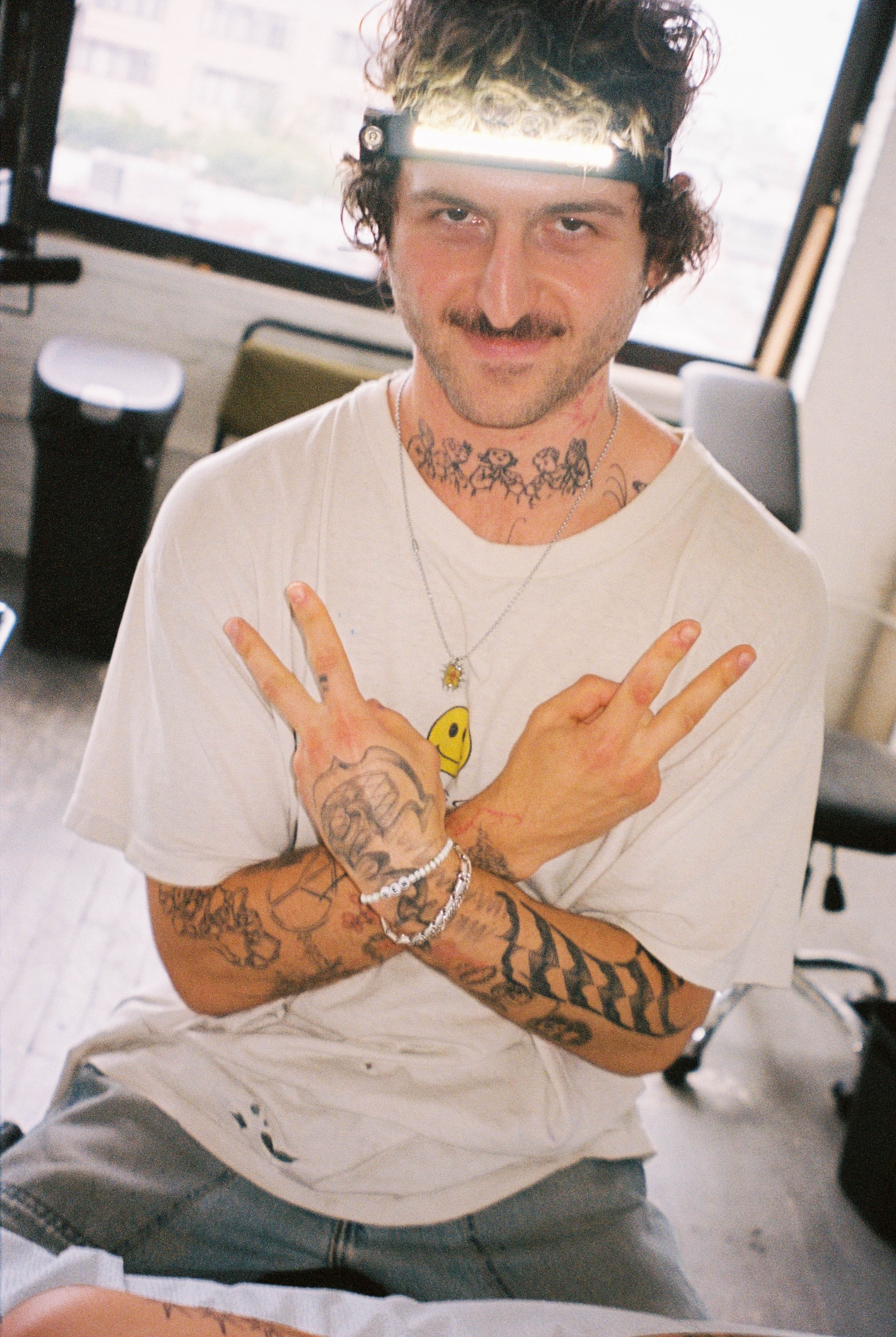
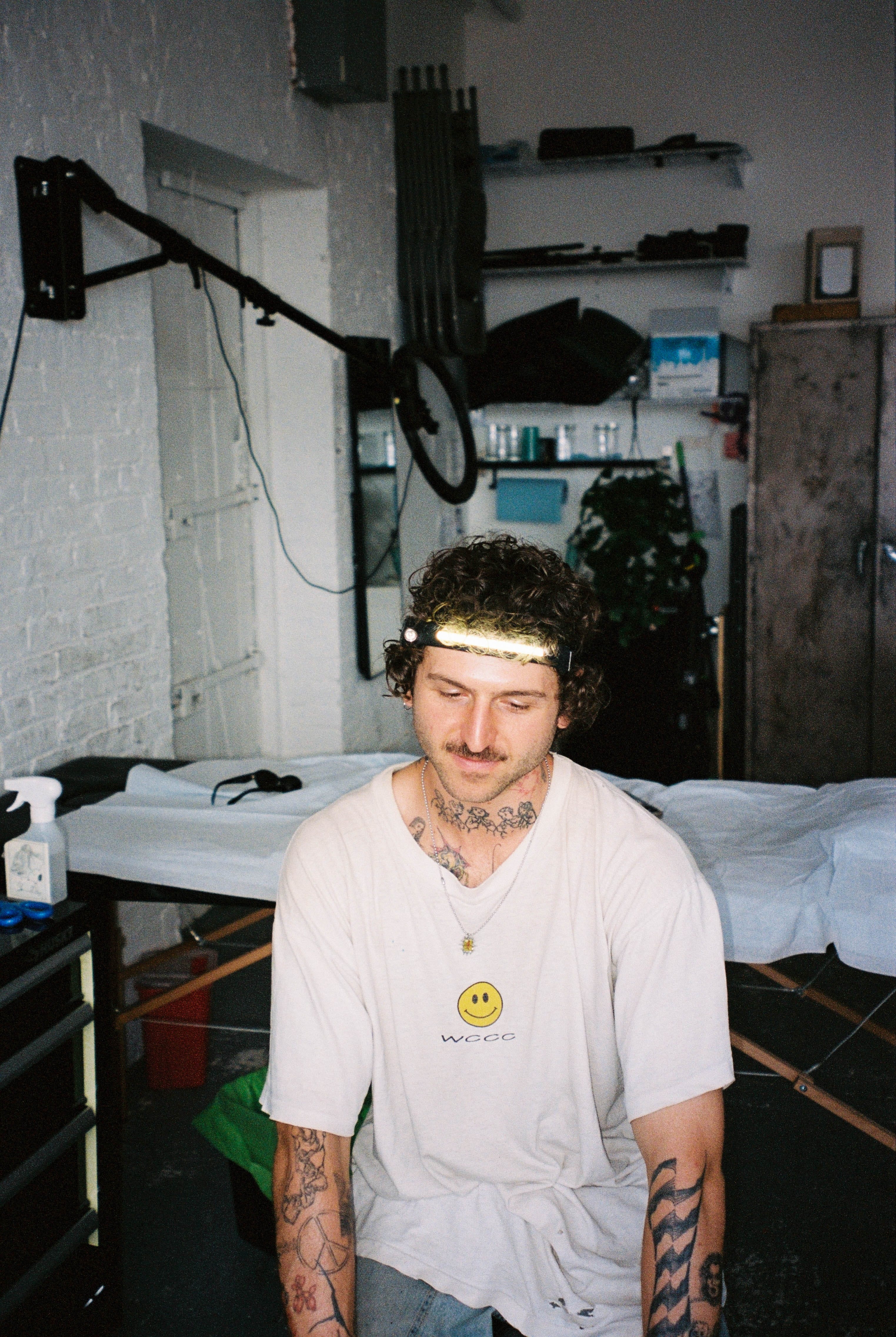
On paper, Ben fits the bill for a stereotypical tattoo artist. Lives in Bushwick? Check. Absolutely yatted? Check. Very cool? Check. And while all of those things are true, there’s something about Ben that is the antithesis to what one might expect of a tattooer.
I met Ben two summers ago through mutual friends. It was the first summer post-covid in New York City. Sticky, hot, humid days spent bopping around Brooklyn—day drinking that turned into vey late nights of bar hopping. The Basement to Nowadays pipeline in full swing. Ben seemed to be at the nucleus all of it. Often the one making the plan and wrangling the group, he was methodical in his ability to craft the perfect NYC night out, without the classic plight of a planner. There was no anxiety induced micro-mangement causing the classic bad vibes, lost souls, and/or members of the group crying or throwing up off the Jefferson L stop. No, Ben’s talent was in mastering the skill of organized chaos. Fun was always had by all. We instantly hit it off and I promptly scheduled two tattoos.
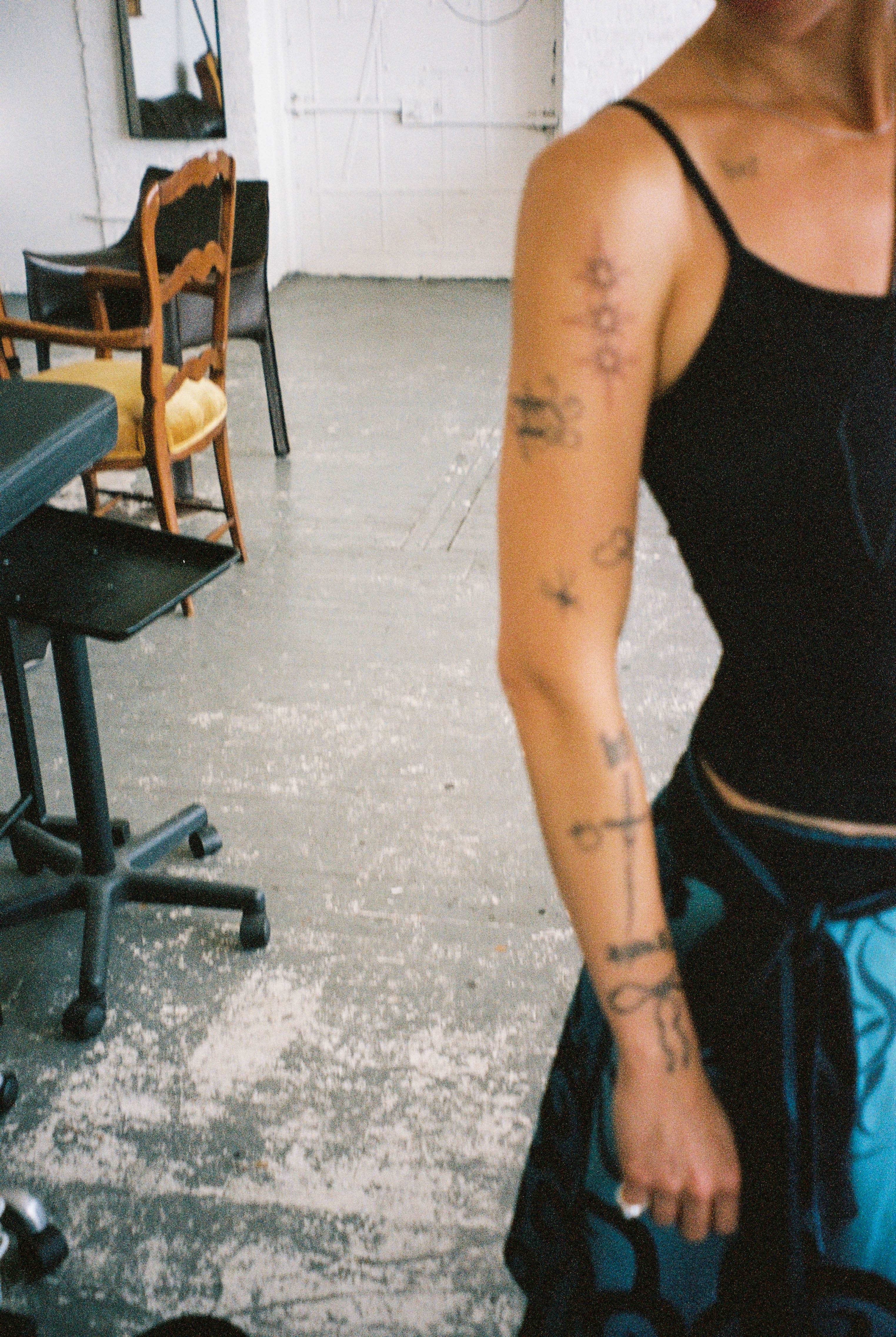
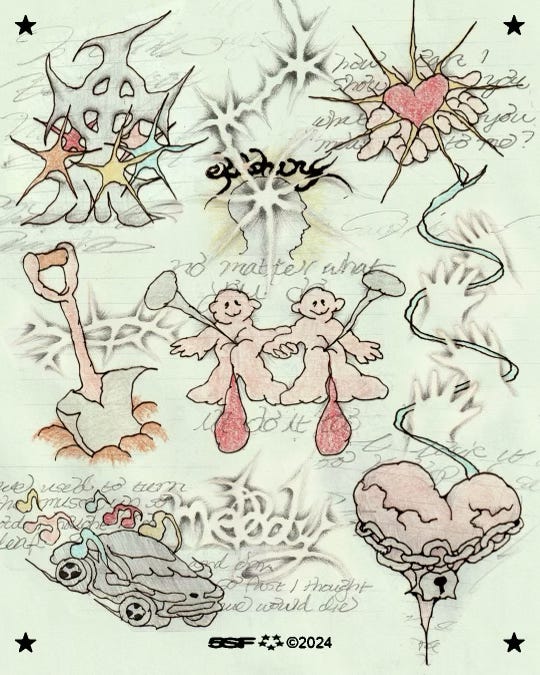
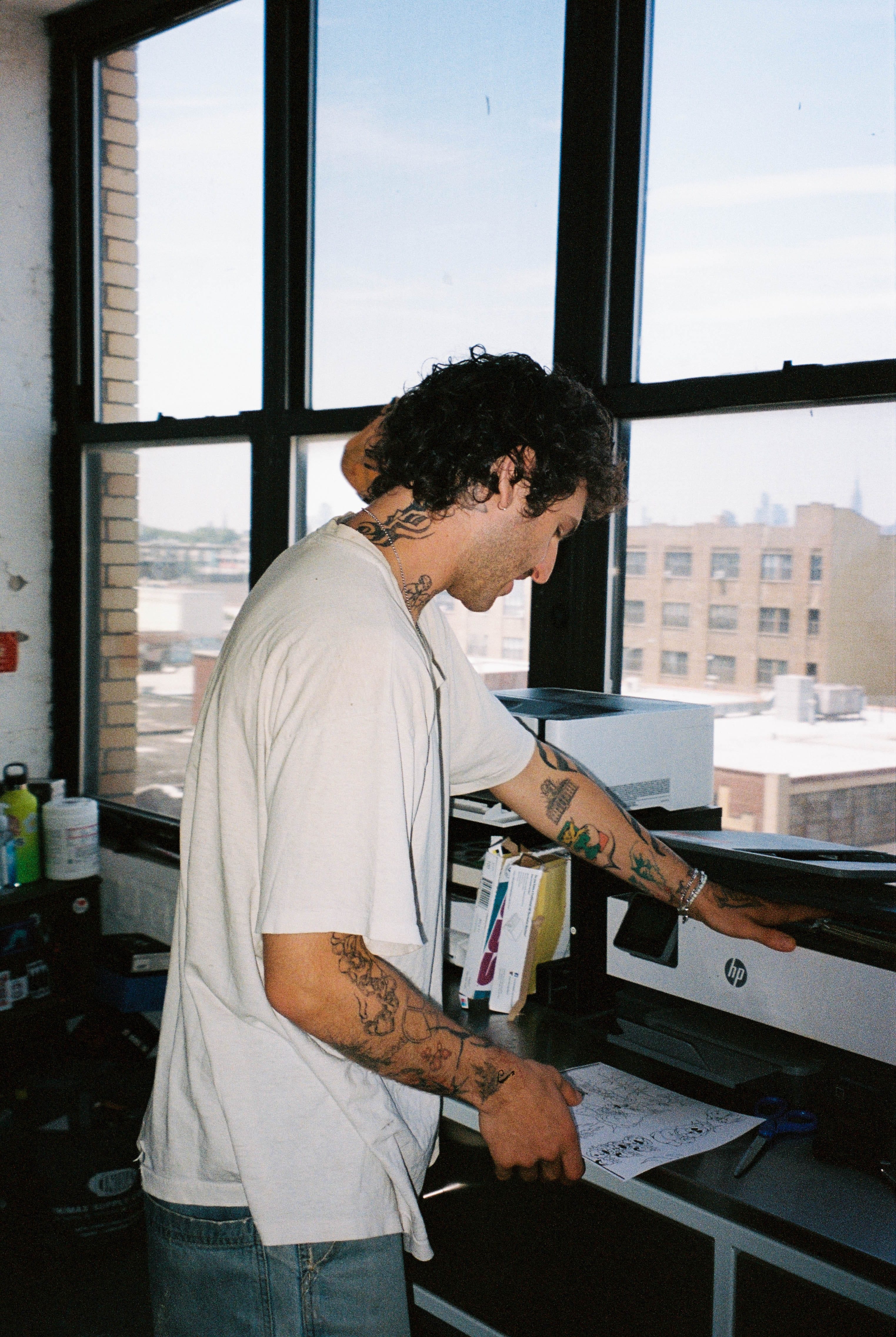
FKA @julessportif, now @5starfuneral, Ben’s work is the visual embodiment of his essence. Bright color and sweet cartoonish characters in stark contrast with thoughtful language and abstract design. It’s no wonder his pieces are popping up on your story feed, shared by your most tapped in follows.
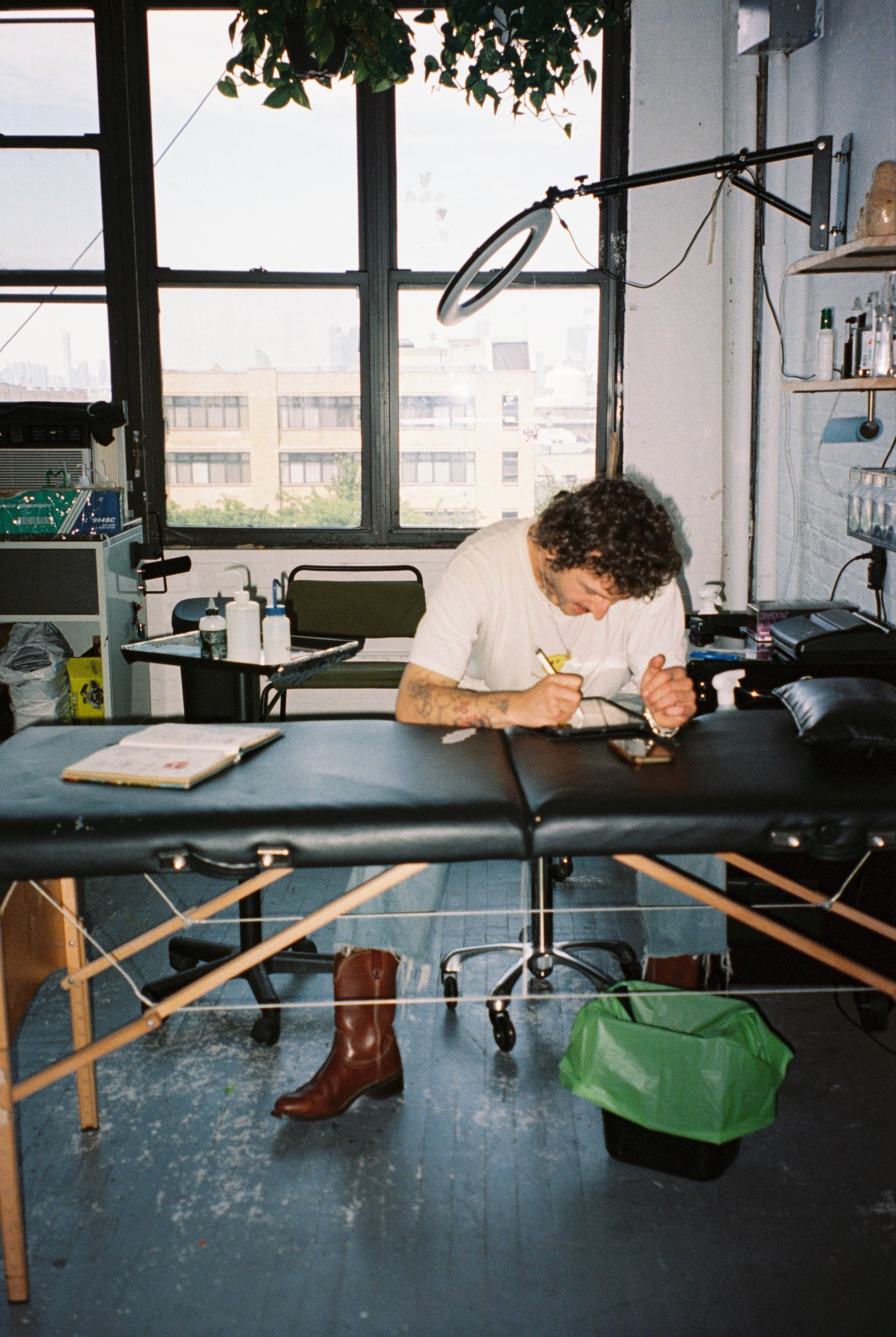
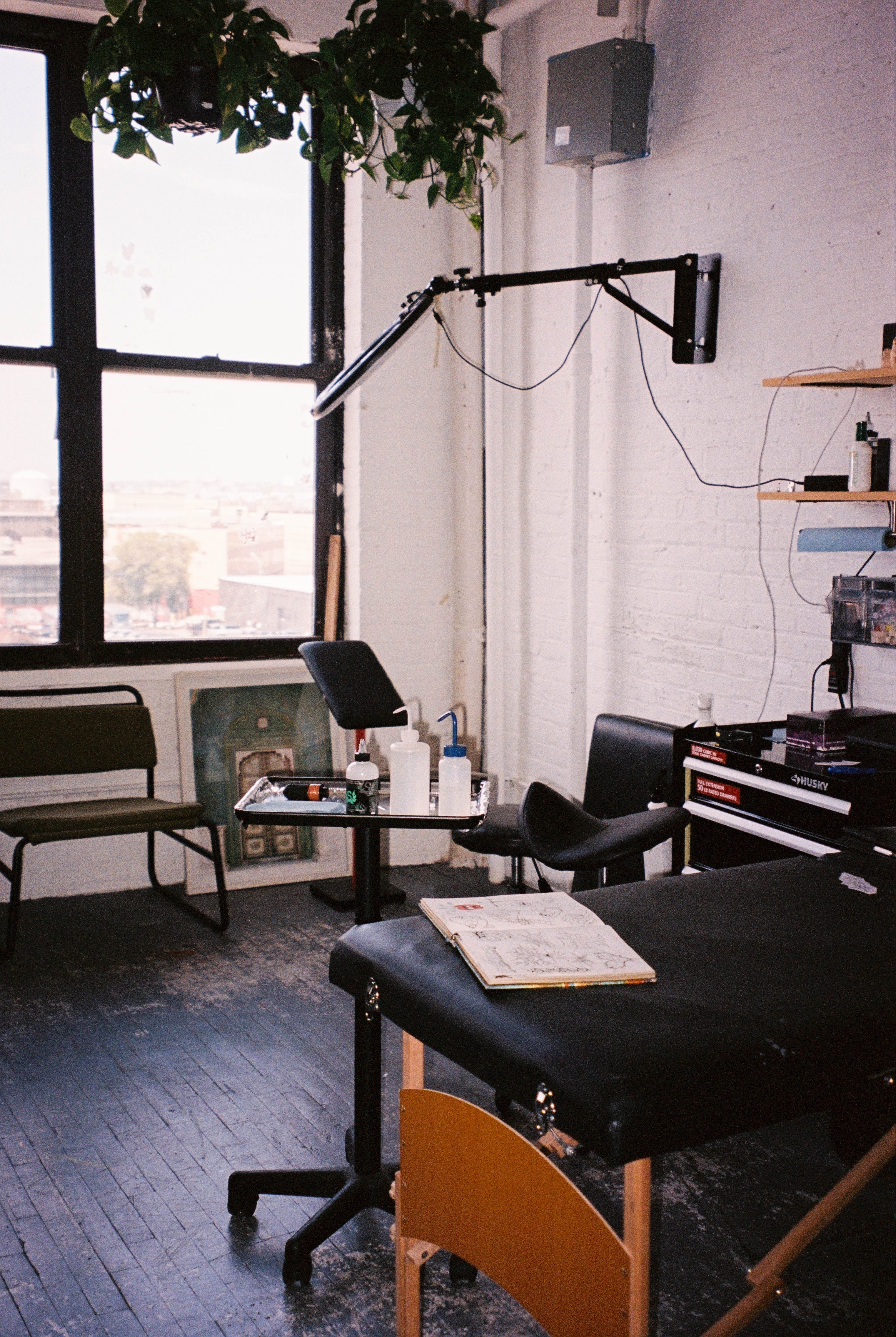
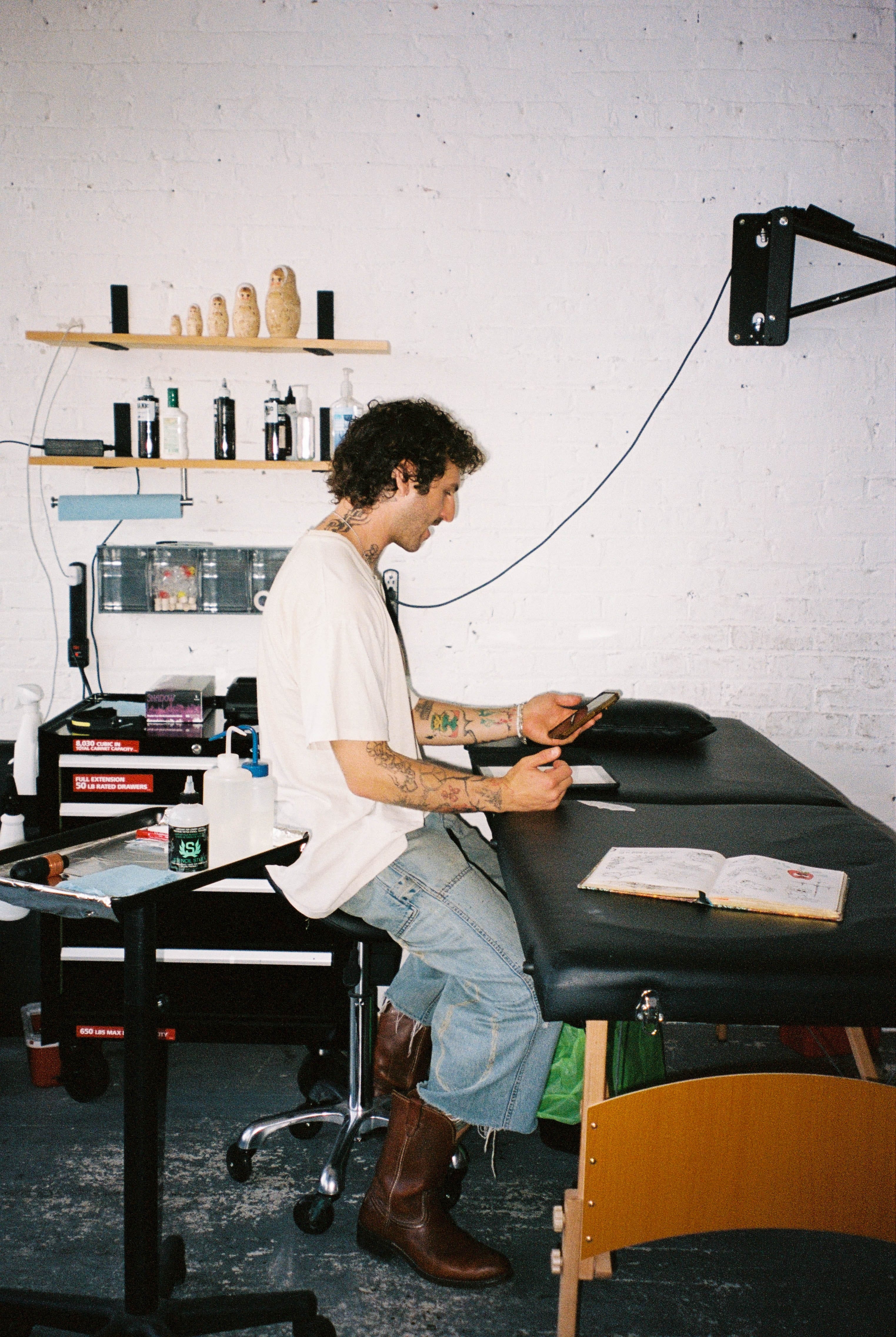
On my most recent trip to New York, I spontaneously hit up Ben to 1. see if I could get another piece but also 2. convince him to be interviewed. Nearly everyone in our generation has tattoos and I have a good amount too. But, if I’m being honest, I know absolutely nothing about what that work looks like and how those I admire in the space think about their careers. So, on another Brooklyn summer day, I went to Ben’s studio for another tattoo, a little chat, and more inspiration.
I: Introduce yourself.
B: I'm Ben. I'm a tattooer and I live in Bushwick.
I: I feel like those two go hand in hand. They have to be mentioned in the same line. How long have you been tattooing for?
B: I've been tattooing for four years.
I: And do you love it?
B: I do love it. It's the best job I've ever had, for sure.
I: What other jobs have you had?
B: I was a graphic designer before this for two years. I had one job in fashion doing design for a small label, hated it. And then I had another job working for this artist who had his own line of supplies, that kind of thing. It was kind of like a hype brand. Hated that too. So I'm just glad that I found tattooing when I did. The timing kind of worked out perfectly. I had been looking for a way out of that second job that I mentioned, and one of my coworkers there, the person I was kind of brought on to replace, she left. She was tattooing and it was going well for her, and she switched to part-time. That's when they hired me. And then slowly she was inching her way out the door and I was like, no, take me with you.
I: Did she?
B: No, not at all. She left. She was like, fuck this place. I'm going to be a full-time tattooer. And I was like, that's so fucking cool. And that was when I really decided that it was something that I was interested in, but it's really hard to get it off the ground in the beginning. Also, just quick interjection. Can you stand up for me while replace the stencil?
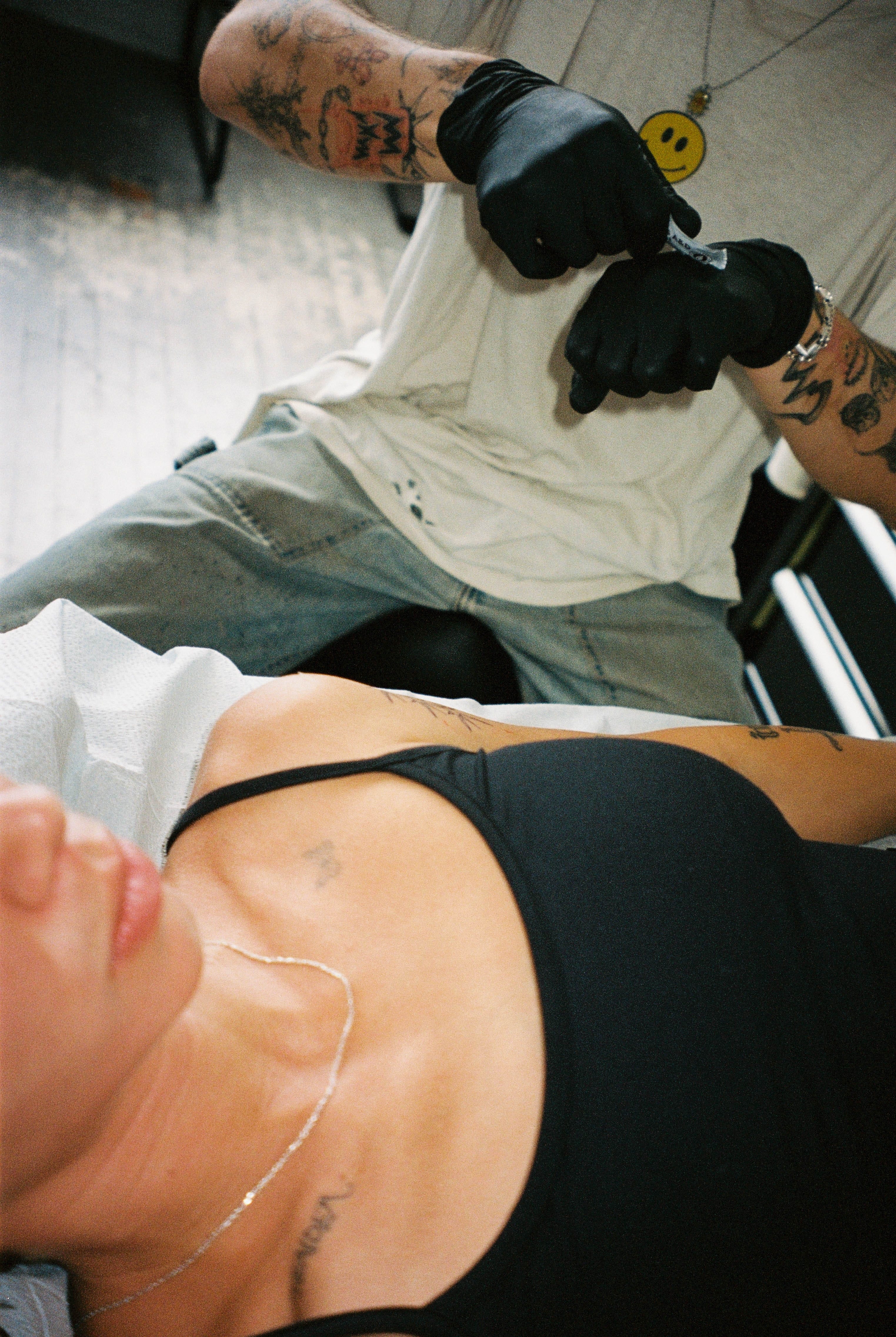
*note I should mention that this interview was conducted while Ben was giving me a tattoo :)
B: But yeah, it's a tough thing to get off the ground when you're working a full-time job. You want this higher or more down here? Higher. Okay. Do you want to look in the mirror?
I: So that was how many years ago?
B: That was 2019. So five, I guess. That was when I got a machine, and because I knew I didn't want to hand poke, I tried doing one hand poke tattoo ever before any of this ever happened. Before I thought that I would want to tattoo professionally or anything, I just used a sewing needle and I tattooed my finger. I think I was drunk at home, so bored. And that was a really bad experience. In hindsight, I chose the worst design in the worst place to try hand poking, which is probably why I hated it so much. But I knew from that, I was like, I don't want to do stick and pokes. I just want to go straight to machine. So I got a machine then in 2019 and practiced on myself and whichever friends were willing to let me do shitty tattoos on them.
I: What was it like trying to get this off the ground while having a full time job?
B: So hard. And I was like, how am I going to fucking get out of here? How am I going to leave for this job? And then covid hit, and that was really the perfect opportunity to start tattooing. I got furloughed from the job. He told me over the phone. He was like, ‘so covid shut down everything. It's going to really bad. I'm so sorry. We're going to have to furlough you. You're going to get unemployment.’ I had to keep myself from squealing, jumping up and down. I was like, ‘oh, no, that sucks.’ And then, yeah, it was lock down and just had all the time in the world. So I was tattooing myself and my roommates, and again, whichever friends were willing. And then it just kind of snowballed from there.
I: Okay. I'm taking a step back, but I have a lot of questions about this there. What were you like as a kid?
B: As a kid, I was into art for sure. I liked to draw a lot. I was really into classic little boy shit, like robots. And I had a construction vehicle phase when all I would talk about was different construction vehicles. And I knew all the different kinds. My parents love to tell this story about when we were on a road trip, I was three or something, and I was strapped in the car seat in the back, fully asleep. And every time we would pass a construction vehicle, I would miraculously wake up and yell out its name, and then go back to sleep.
I: Are you still in the construction vehicle?
B: I actually do have a tattoo of the Bobcat logo. But that was an early tattoo that I gave myself, but I just mostly think it's a cool logo.
I: I'm assuming you kind of got into creative stuff in high school.
B: Yeah. Again, I was always drawing when I was younger, but I guess kids just draw a lot. So that wasn't really any indication.
Isadora: I don't know, I hated anything, arts and crafty, and I didn't like anything I wasn't naturally good at,
B: Me too. Me too. That's why I didn't play sports. I knew sports weren’t for me because they made me fucking miserable and I was so bad at them. And all my friends were good at sports, but all my friends were bad at art. So I guess that was when I was kind of like, oh, maybe art can be my thing.
I: Where did you grow up?
B: I grew up in North Hampton, Massachusetts. I don't know if this is still true, but it's been called the Lesbian capital of the world. It's where Smith College is. And a lot of people graduate Smith and are like, ‘Hey, this is a nice town. I'm just going to settle down here’. So yeah, people growing up were like, you have a dad? Where's your second mom, bro? It was a nice place to grow up. But anyway, the downside was I had some art teachers that were, I was also a teenage boy, and those classes were mostly girls. So I think the teachers also just didn't really have the best sense of how to handle the boys in their classes, or the other boys I guess, were more shy and reserved. And I was loud and rambunctious. But anyway, I did art kind and made a high school portfolio that I used when I applied to colleges, and I really wanted to go to art school, but somehow my parents kind of talked me out of it and convinced me to go to a liberal arts school so that at least I could study ‘something practical’, their words. So I actually went to college thinking I was going to be a business major, really, which is a real knee slapper. Now I want to be as far away from the business world as possible.
I: Even though now you own your own business!
B: Yeah, I guess you’re right! I started freshman year of college as a business major and an art minor. And after taking a few business classes, I realized pretty immediately that it was not for me. I remember my friend Caroline and I were both business majors and art minors. We were sitting together in the library late freshman year or maybe early sophomore year, working on our business homework together. And we just looked up at each other and shook our heads and we were like, fuck this shit, dude. Let's go right now to the registrar and change our majors.
I: What did you change to?
B: So then I was an art major, but even then I didn't really know what I wanted.
I: Where was this college?
B: Skidmore College. It's in Saratoga Springs. Maybe because it was liberal arts and not an actual art school, I don't remember ever hearing that I could choose to actually be an artist. And my parents, everyone growing up was like, oh, you should do graphic design, you should do advertising, blah, blah, blah. Kind of trying to find ways to get me to not actually pursue what I wanted to do. But I had heard it so much that I didn't know it was what I wanted to do. I thought I wanted to be in advertising. People convinced me that being an artist was impossible or not something to strive for. So yeah, I mainly focused on digital art. There wasn't a graphic design program. Although my thesis project was much more conceptual. I did a VR simulation. That was the most work I've ever put into anything. At that point. I was like, oh, maybe I want to be an experimental digital artist.
I: Like an ~internet~ artist.
B: Yeah, internet artist, new media artist, whatever the fuck. At the intersection of computer science.
I:…Have you heard of NFTs?
B: Hahaha. Right, right, exactly. And it is funny because all of these paths that I sarted going down now I fucking hate that shit so much. And not that I hate experimental digital art, I think there's a lot of cool stuff out there. But yeah, NFTs are a perfect example of what I absolutely fucking despise about that whole world. And I think it was basically being pulled in two different directions, one of which was the more traditional, practical, business oriented, pragmatic path. And the other was coming from within me that was this pull of, I just want to be creative on my own terms and not do it according to what anyone else is telling me.
I: That's definitely been a common thread across a lot of my interviews. A lot of people have said, ‘I was always creative. I always wanted to do this, but I was told I couldn't go to college for it.’ So covid happens, you're furloughed, and then you're like, fuck, I'm going to start tattooing.
B: Yeah. I was also making jewelry at the time, and I wanted the two practices to exist in the same universe. I wanted it to be a tattoo and jewelry practice, so I was pretty focused on that as well. And also doing some fine art stuff, was building this website. I was all over the place, but it felt really good. It was one of the most creatively fruitful periods in my whole life. But once the dust kind of settled and things kind of started picking up after lockdown, tattooing was the thing that was really getting the most traction. So all the other things that I was working on started just kind of falling to the wayside until the point where I was just tattooing.
I: In creative careers in general, the path of how you do what you do is so hazy, but in tattooing especially, it's like, I don't know. I feel like most people who are even into art don't really know. I've heard of apprenticeships and stuff like that, and I'm kind of curious what your path looked like if there is a traditional path in tattooing and if you took that path or if yours is sort of different.
B: Yeah, I mean, there definitely is literally “a traditional path”. You do an apprenticeship.I know a couple people who have gone the more traditional route. And in the more hardcore ones, you're not even allowed to touch a tattoo machine for the first year. You're sweeping the floors, you're cleaning up people's stations, you're just doing whatever the actual artists need you to do, and then drawing a shit ton, which is actually pretty beneficial. I think the idea is that in the more traditional path, anyone can be like, Hey, I want to be a tattoo artist. And as long as they're committed enough, they will gain the skills to be able to do it. So they're teaching them how to draw, not just how to tattoo. There's value in that. I used to be really against it because I was a self-taught tattooer. But I know a dude who is a traditional tattooer, classic American traditional, and he did an apprenticeship, and he actually said something that really changed the way that I think about a traditional apprenticeship, which is that he said that he doesn't even think of himself as an artist. He was like, ‘I'm not an artist. I'm a tradesman. I think of myself as being more similar to a plumber than an artist. I have a trade. I learned the trade from someone who's been doing it for many years. He showed me exactly how to do it. Now I know how to do it, and I just do my trade to the best of my ability. And it is not about being super unique or even super creative for me, it's just about being really fucking good at what I do.’ And I was honestly respect. That's really cool.
Isadora: What’s the alternative?
B: The DIY or self-taught path, which is what I did, what most of the tattooers that I know did, and it can look a lot of different ways, but you're basically just fucking figuring shit out from the ground up with really next to no prior knowledge.
I: Do people ever ask you how to get into it?
B: Whenever people ask me, ‘how do I learn how to tattoo?’ I'm say get a lot of tattoos and watch people tattoo. You ask questions. Sometimes people are more or less willing to answer 'em, but just get a lot of tattoos, talk to people. And generally speaking, the vast majority of people that I've met in the DIY tattoo space have been super welcoming and helpful. My old coworker that I was mentioning when I was like, Hey, I'm interested in tattooing. She and another friend of mine who had been tattooing for a while, both self-taught, were like, yeah, come sit in on some sessions. Here's what machine you get. Here's what to do. Here's how you set up and break down a station. Just kind of walking you through the whole process.
I: The thing you said about working as a trade is really interesting because our generation was really forced upon the college path. Our parents were like, ‘that's the only way you succeed in the world.’ But now most of us have gone to college and we're like, oh, what was the point? For some people, it works, but for others it doesn't really matter and they're still successful, whatever that means. But also we were told trades like being a plumber or things like that were not respectable, which is fucking crazy. But now it's like, actually these are necessary things that we need.
B: Exactly. It's like these people do real things that are grounded in reality. They provide services that people need, something that you can touch and see, as opposed to some fucking email job where you're just sitting at a desk, sending emails into the void, scheduling meetings to talk about other meetings, doing fuck all.
I: Yeah, it's interesting what we've placed value on culturally and even within art, placing value on being an artist and not on a trade, but all of these things need to exist.
B: Yeah. I think all of that is just a product of the time that we were raised in and a product of our parents' parenting, because I feel like our parents' parents, many of them were maybe tradesmen or people doing more maybe blue collar work. And I feel like they had this mentality of I do this work so that my kids don't have to do this work. And it creates this idea that it's more, I don't know, desirable. You're of a higher class or something if you don't do manual labor or whatever. But then it just creates this whole economy of people with no functional skills. And I think we're realizing now that, oh shit, those blue collar who have the skills that are essential to life and everything else is just fucking bullshit.
I: It’s all fucking bullshit :) Okay. You said that one of the best things to do is get a bunch of tattoos. When did you get your first?
B: Pretty late actually for a tattoo artist. I got my first tattoo when I was 22. It was after I had graduated from college. I don't know why. I got my first one totally on a whim and in Ecuador, I was there with two of my high school friends. I remember one of the ideas that crossed our minds was to get Ecuador, the word in comic sans to commemorate our trip, we knew we wanted something along those lines. It was really fucking stupid. We were on this bus ride and we passed a chicken restaurant, and I turned to him. I was like, I like the logo of this chicken restaurant. It's like a big chicken, anthropomorphic chicken, giving a thumbs up with his wing. I was like, that's pretty cool. So that's what we settled on. That was my first tattoo.
I: And then how soon after you get your next?
B: Honestly, not that soon after. It was maybe another year before I got my next one. It wasn't like I was instantly addicted to it or anything. My next one was from that friend that I already mentioned who had been to tattooing for a little while. The first tattoo I got from her was in her childhood bedroom. That was the first time that I had any idea that you can just tattoo whatever you want on people, that it doesn't have to be a traditional tattoo. You know what I mean? That you can be an artist and have a distinct style and people will come and get your art tattooed on them. That was the first time I had seen that, and I was like, that's really fucking cool. That was the first time that I considered tattooing is a career, but not with any degree of seriousness.
I: I want to go back to the distinct style piece because obviously I feel like you have a very distinct style. And when you were deciding you wanted to do this full time, were you doing an exercise and what your personal style, or even I guess, your personal brand, as cheesy as that is, was? Were you thinking about that or did it kind of just fall into place?
B: I was absolutely thinking about that. I would go as far to say, thinking about that too much. I think my background being in design and branding, I was like, oh, my tattoos and my jewelry and this website and all this stuff has to be so cohesive and blah, blah, blah. In the beginning it was helpful because like I said, I had always drawn, but I didn't really have a drawing style that was unique to me. I could do rendering pretty decently, just drawing from photos and stuff, and occasionally I would do more illustrative work that was a little more stylized, but I was just kind of playing around. I didn't have a style until I started thinking about, oh, okay, this is going to be a tattoo. Then that kind of helped me to narrow my focus to create more of a distinctive style, and that's really how that develops.
I: How would you describe your style?
B: I mean, it's gone through many iterations, and I still feel sometimes maybe the graphic designer in me is freaking out a little bit over how it feels to me. I do feel like it's a bit all over the place. At times I've described it as collage or mixed style. A lot of my work is focused on sort of a juxtaposition between contrasting elements. So I'll do a tattoo that has one part that's a little more realistic, that's drawn based off of a photo, and then superimposed on top of that will be a cartoon or some text or something more illustrative. And I am really interested in that sort of interplay between the contrasting textures and images and themes as well.
I: A lot of this particular project is about moments where people feel like they don't know what the fuck they're doing. They feel sort of creatively uninspired, don't really know how to get it back. They know what creative flow, I guess feels like, but they're stuck. They're in a limbo. And even though you dropped a path you were on to pursue your dream that doesn't necessarily mean that it always feels like a dream.
B: I mean, it definitely doesn't all the time. And I guess my dream was just to make my own art and make a living off of it, which I am doing. But tattooing specifically wasn't really a dream of mine, I don't know if it was ever really a dream per se, but I just realized that this was a way that it was possible to support oneself off of making their own art as opposed to making art on other people's terms, which is the only ways that I've been able to make money before.
I: When you have been feeling sort of in a limbo state, if you have, what are ways in which you've sort of gotten yourself out of it? Could you name them? I mean, some people can't. It just sort of happens organically,
B: I kind of feel like I'm in a little bit of a limbo stage right now, to be honest.
I: A lot off people have answered that way.
B: As an artist, it's almost, unfortunately, maybe 50 50, you feel really inspired and you're in a flow and things are going really well, maybe half the time, and the other half the time you're like, what the fuck am I doing? Right now I definitely feel a little bit stuck. The biggest thing that has helped me is giving myself the space to not feel inspired, being okay with not being able to be super productive in a certain period. I think when we feel uninspired or we feel like things are stagnating, there's this almost panic of what am I doing? Is this all going to end? Is it over for me? Am I not a real artist? Am I a fraud? What do other people have that I don't have? All of these doubts come rushing in when you're not able to produce in the way that you want to. And once those doubts come flooding in, it's near impossible to create because you're putting so much pressure on yourself to be productive. It's like if your boss was standing behind you with a fucking whip, and it was like, ‘DO YOUR WORK’. So I think just reminding myself that it's okay to have periods of stagnation has been really helpful. The other thing that helps is to do anything different, just change something. Walk a different way than you normally do to get to your house. Hang out with some people that you don't normally hang out with, go somewhere you don't normally go. Just anything to kind of get yourself out of your routine, because inspiration comes from variety, I think, or from just experiencing new things. And if you're experiencing the same things every day, of course you're not going to be inspired.
I: Neuroplasticity. You said earlier that the medium of tattooing is not necessarily what you sought out to do, but it was a vehicle for which you could create. If money wasn't an issue, would you be creating differently?
B: Yeah. Yeah. I would be, and that's not to say that I wouldn't tattoo at all. I do enjoy tattooing, but tattooing is a really exhausting medium. You're working on people, so it's not just you alone in the studio, a painter or what we think of as being an artist in a traditional sense, there's a whole other factor, which is the person that you're tattooing, and they have opinions, of course, and sometimes your opinions don't line up. I mean, I even have drawings that I've made in my book that I give to people to look through to select flash that I don't really want to do. And sometimes people pick something and I'm like, I'm going to do it. I gave them the book to look through, and it's in there, and it's something that I drew, but sometimes I'm in my head, I'm like, damn, I don't really want to do this right now.
I: Is the one you’re doing on me right now one of them?
Ben: No, I love this one! And then on top of that, there's a social component too. You’re often you're talking to a complete stranger that so you just met. Sometimes you really get along with someone. And that's one of the aspects of tattooing that I really love is meeting new people that you really get along with and connect with. But sometimes, and it's not your fault or the client's fault, but sometimes you just are on a different wavelength than somebody, and sitting down with them for three hours can be a bit tiresome, and that's just part of the job. So that can also be pretty exhausting. Not to mention it's brutal on your body. My back and neck and shoulders hurt so much.
I: I've been asking everyone this because I think it's interesting to hear people's answers, but obviously validation is a very complicated but necessary thing, and I'm curious how you get validation.
B: On a personal level, when someone comes in and they get a tattoo and they're really happy with it, that's an amazing feeling when you can tell someone is really stoked on a new tattoo you just gave them, that's incredibly validating. But a huge part of it, and I hate to say this, but I think it's probably true with most people that you talk to, is just part of being creative these days is Instagram and social media does play a pretty significant role in that, and that can be really challenging. I get validation if I post a tattoo I did or a flash sheet and it does really well on Instagram, and everyone's like, you're the fucking best. That obviously feels amazing, but more often than that is Instagram making me feel bad about myself because it doesn't get as much attention as I want, and that sucks. But one other area that I think is maybe somewhat unique to tattooing that gives me a lot of validation is trades with other tattooers, which is a very common practice, at least in my realm of tattooing, but I would assume in all realms of tattooing. You have a mutual respect for someone else's work, and if you're both in the same place at the same time and it works out, you'll do a trade where you tattoo each other. And that can be really validating. If it's an artist that I really respect or whose work I really love, if they're down to trade with me, that that feels awesome. It's like those are the people whose opinions I really respect the most are other tattooers, and there's no greater compliment than a tattooer wanting to have one of your tattoos on their body.
I: For sure. Which actually leads perfectly to my next question. A big tenet of this project is this idea of inspiration over competition, so shout out some folks that inspire you.
B: I’m just gonna shoutout some studios because there are way too many individual artists to credit. Actually right in this building, gotta shout out my former studio mates at Shape World. Crush NYC and Musiquarium are both absolutely stacked. But the first studio that really inspired me was Spitball, where my friend Bella who I mentioned earlier used to work. Going in there for the first time, seeing everyone’s art up on the walls, and everyone hanging out and tattooing whatever they wanted, I was like, ‘holy shit, this is the fucking coolest thing I've ever seen.’ I would say that’s where it all started for me. Spitball is actually closing down now - it’s the end of an era for sure. My girlfriend is also a huge inspiration, definitely.
I: You gotta shout out wifey.
B: Yeah, I got to shout out Wifey. Fae is constantly inspiring me. She has such a way with tattooing, technically. I've been tattooing for quite a bit longer than she has, and just her ability to reproduce images and get perfect shading on everything, really. It becomes almost more than a tattoo.
I: Do you have aspirations for your creativity in the next, let's say five years?
B: A hundred percent. And I think about this a lot. Going back to what I was saying about tattooing as a medium and that I love, but that it is really taxing. I really want to expand my practice outside of just tattooing. Tattooing is what got me here, and I will be forever grateful to tattooing for getting me to this point. But now that I have a little bit more of a platform and I have a little bit more of my own style and carved out this niche for myself, I really want to do more fine art stuff. I would like to get back into jewelry, wanted to do clothing for a while. So yeah, I mean, there's so many other areas that I would like to expand my practice into, but I think fine art is probably the biggest one, because that's the thing, that's the purest form of art is making it for no other reason than to make your vision come to life. And tattooing is that, but it has this other transactional component where you're providing a service and almost like a product to somebody. Of course, it can go much deeper than that and be an almost spiritual practice and connection. But I think for me, being able to just make the art that I want to make for the sole purpose of creating it, that is definitely a goal of mine.
I: I noticed you changed your Instagram name. What prompted that?
B: Well, going back to what we were saying about having a brand, so when I first started my Instagram, I was thinking of it. I was thinking about the clothes and the jewelry, and I was kind of thinking of it almost as a brand. But over time, as I've kind of strayed into new creative territory, the old name didn't really suit the project anymore or the practice. So it feels like a big deal to change your Instagram, which is so silly, but it is how people refer to you, even not just online. I was just ready to turn over a new leaf. So now we're a five star funeral, five star funeral, but I don't know, there might be another change somewhere down the line.
I: We're constantly growing and evolving, even on Instagram.
B: Exactly.